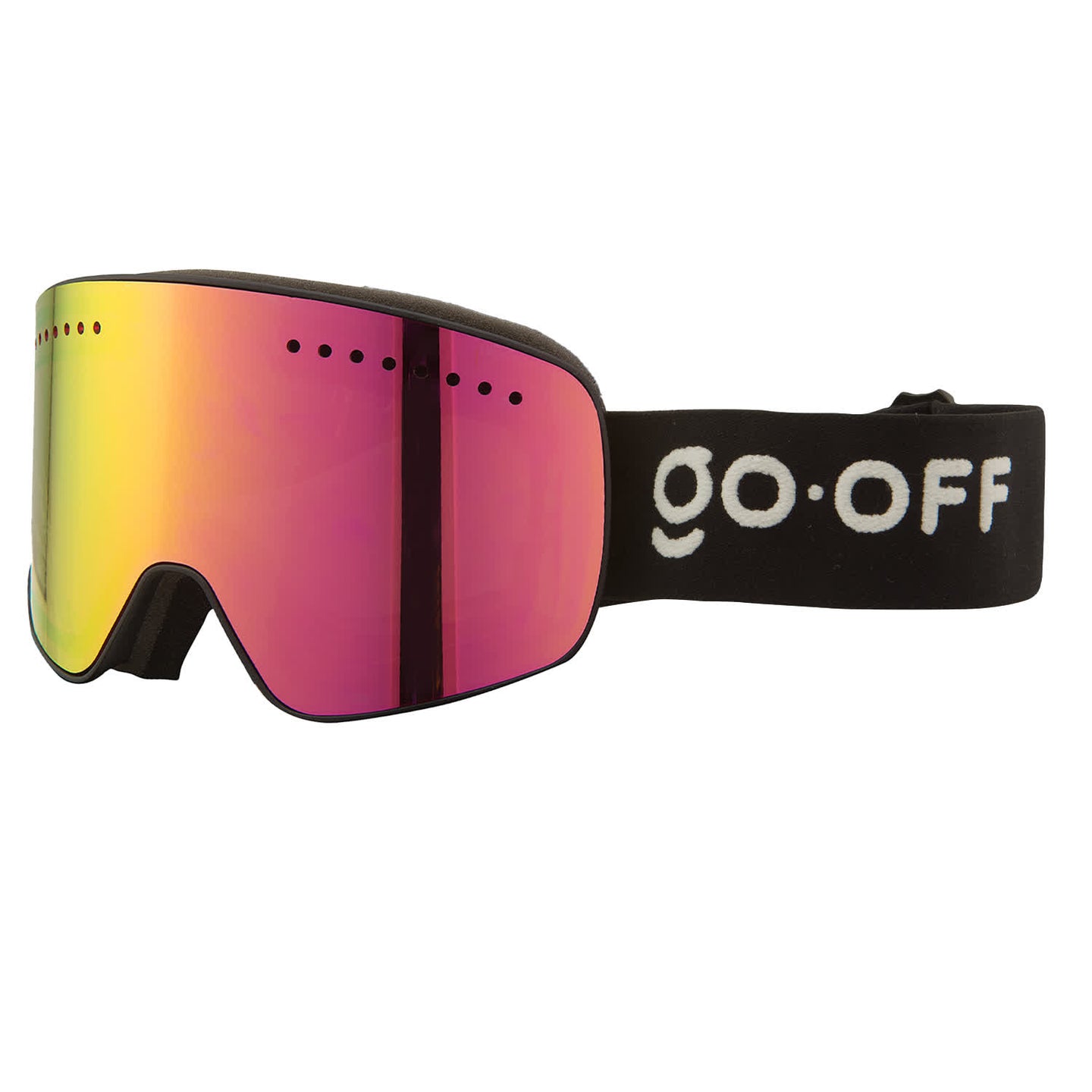
MAGNET
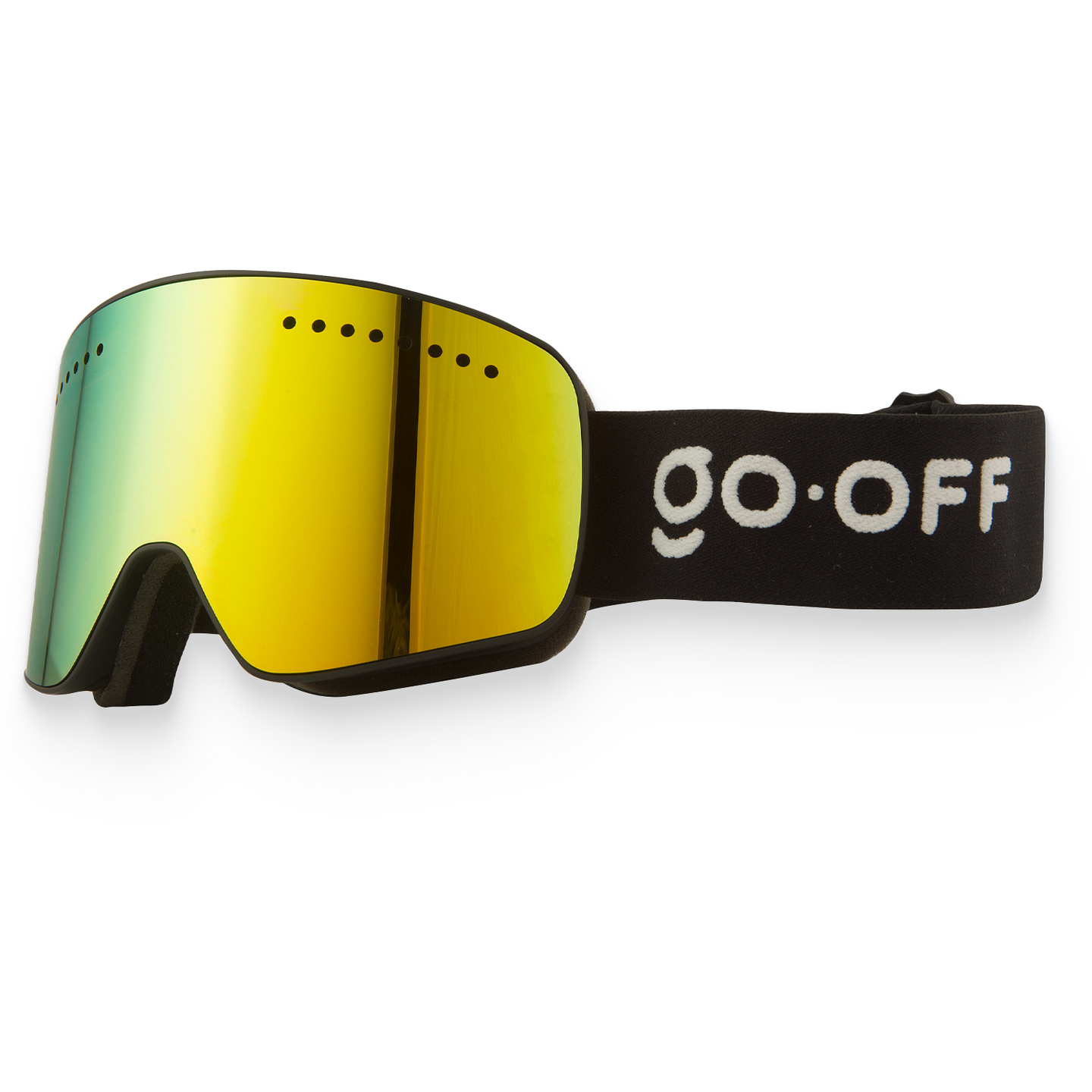
Ski goggles with magnetic lens system for perfect vision in all conditions. One goggle, multiple lenses. From sunny glacier days to foggy descents, enjoy clear view, fast lens changes and comfort with any ski helmet.

Ski goggles with magnetic lens
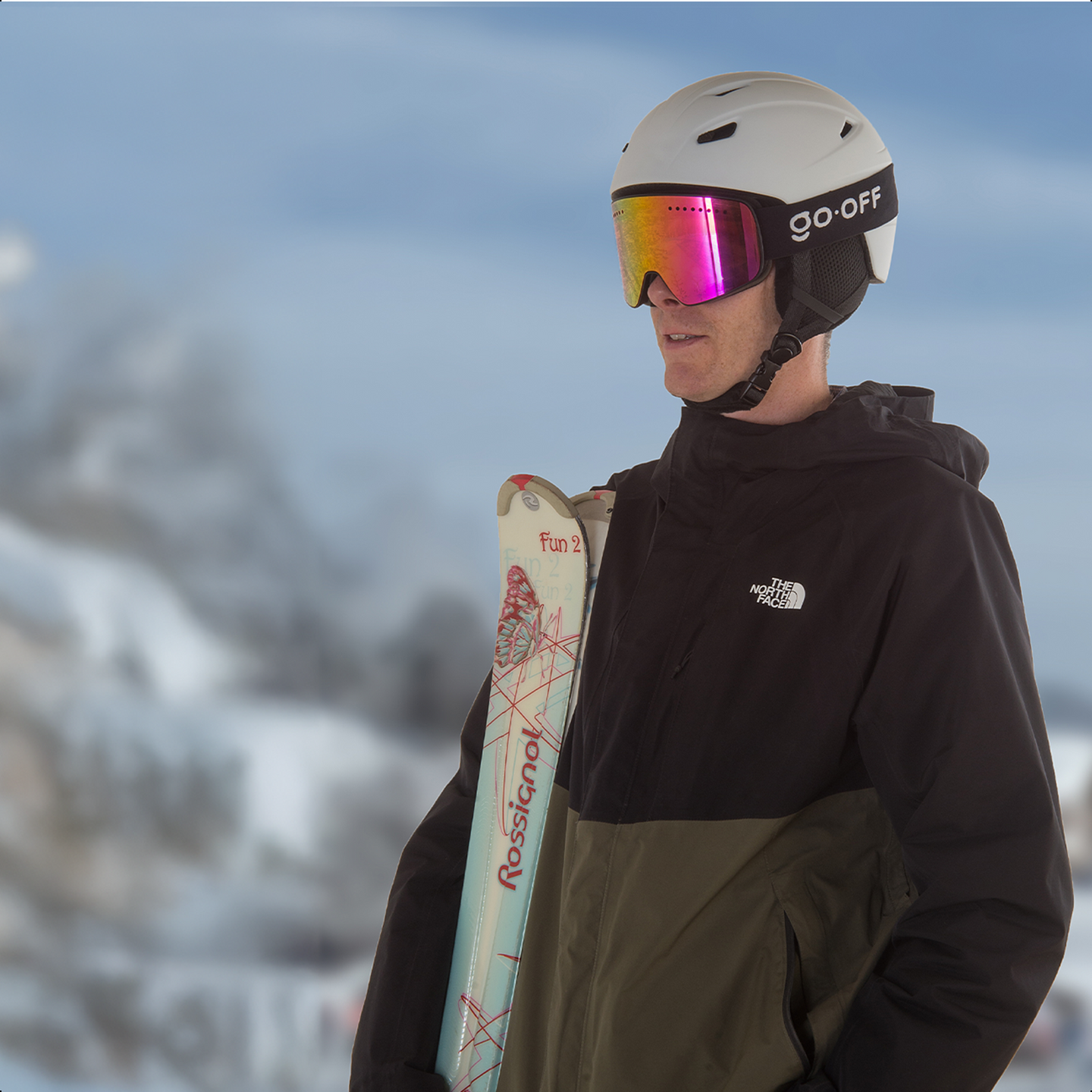
Stylish ski goggles that fit any ski helmet. Lenses available for all weather conditions.

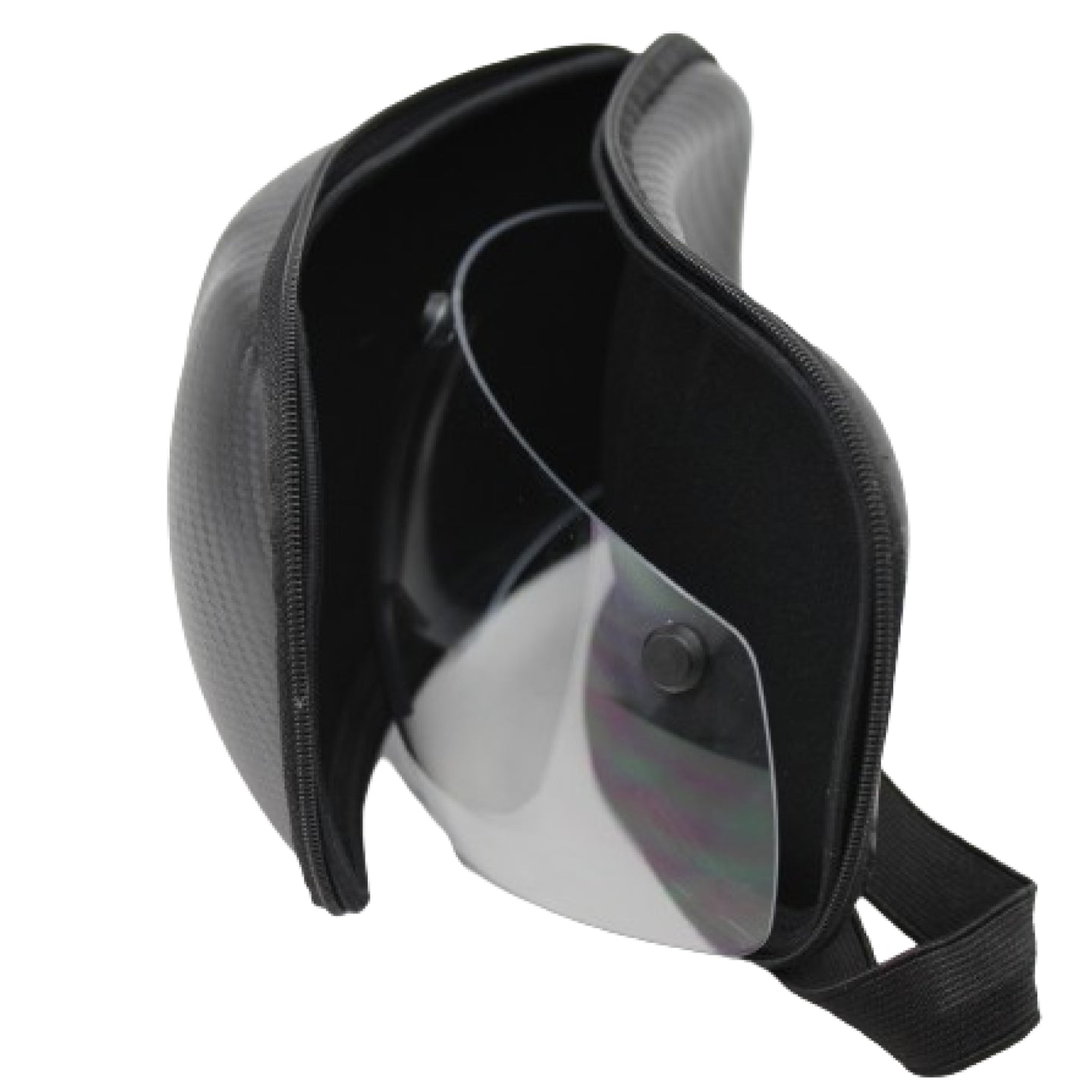
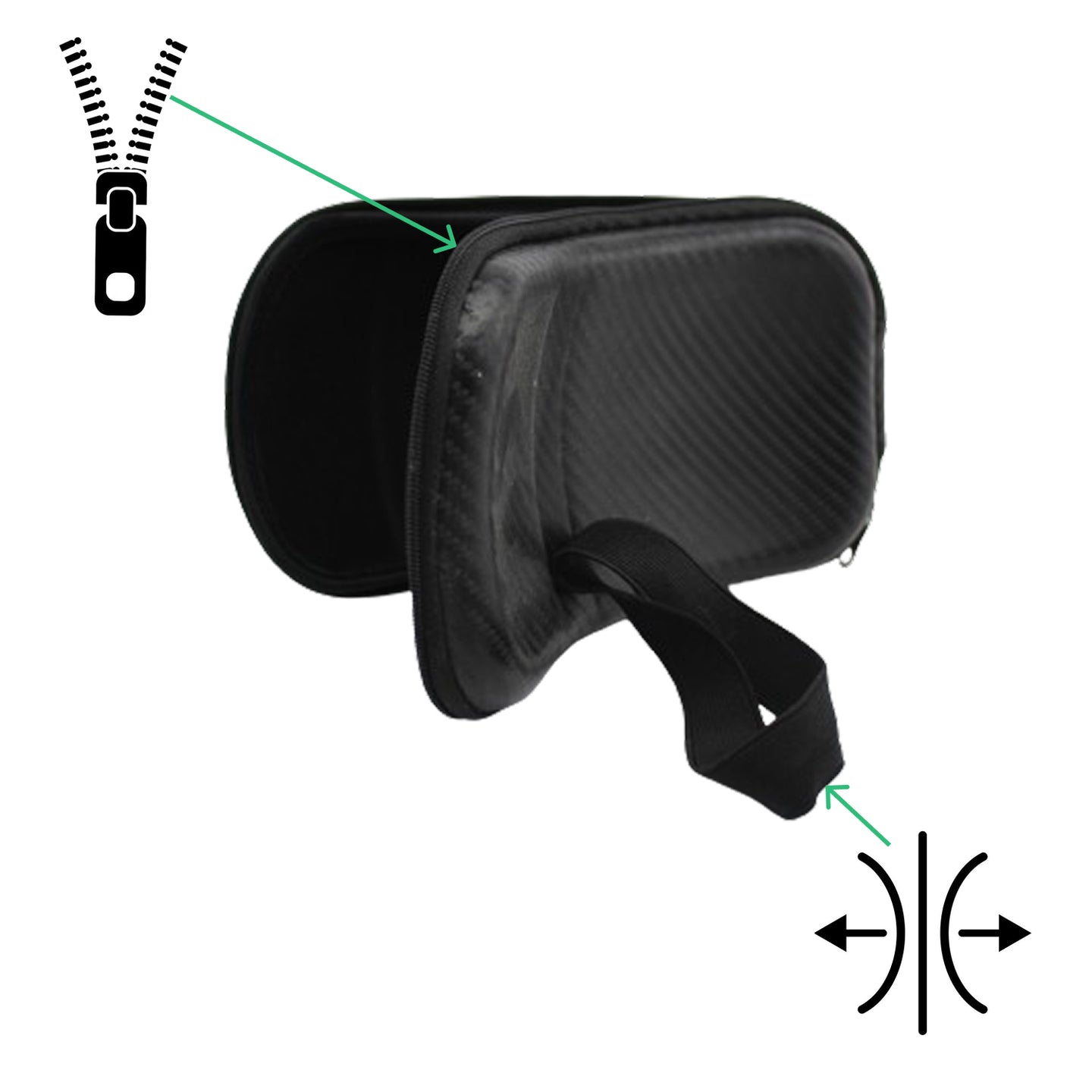
With protective cover
Protect your ski goggles after skiing or keep your extra lens for on the go

Strong magnets
Easy to change lenses thanks to the lift system and rock-solid grip for the snow.






What our customers think
Bought a great helmet and received excellent advice. Excellent service: fast delivery, and I could return it free of charge. And they also work as circularly as possible; in short, I'm a very satisfied customer.

Good, sturdy helmets with handy visors. Excellent service. I accidentally ordered the wrong item, but the correct one was delivered to my home the next day, free of charge.
The bike helmet arrived and fits perfectly. Ordered yesterday and delivered today...thanks also for the excellent service and help I received. Very satisfied customer 👍Isabelle...
Buying from this supplier is a true pleasure. I had a few questions and received excellent and quick assistance with the order. These days, it's nice to speak to a person on the phone, rather than a chatbot, which often leads to misunderstandings. Now I just have to wait for delivery to physically assess the quality.
How to choose the right ski goggles: 3 things that really matter
Good visibility on the mountain is not a luxury. It’s control, safety, and confidence combined. Whether you ski groomers, explore off-piste, or snowboard in changing weather, the right ski goggles make the difference between reacting and anticipating.
A great pair of ski goggles is not about trends or colors. It’s about fit, vision, and airflow—working together seamlessly with your ski helmet. Below are the three most important things to consider when choosing ski goggles for normal ski and snowboard use.
Fit and design: built for maximum vision and helmet compatibility
Fit comes first. Always.
A well-designed pair of ski goggles should offer enough width to provide a wide field of view. Peripheral vision matters on the slopes—whether you’re scanning terrain, spotting other riders, or reading changes in light and snow texture. Narrow goggles limit awareness and increase fatigue.
Equally important is the shape of the frame. The upper edge of the goggle needs sufficient curvature to match modern ski helmet designs. This ensures a seamless fit without pressure points, gaps, or airflow issues. Poor helmet compatibility leads to discomfort and reduced protection against wind and cold.
The strap matters more than most people think. A wide, adjustable strap allows the goggles to sit securely around any helmet size, from compact freestyle helmets to larger all-mountain designs. Stability is key—no shifting, no constant readjusting.
What to look for in fit and design:
When goggles fit properly, you forget about them. And that’s exactly the goal.
Vision: one goggle, every condition
The main reason for wearing ski goggles is simple: visibility. Everything else comes second.
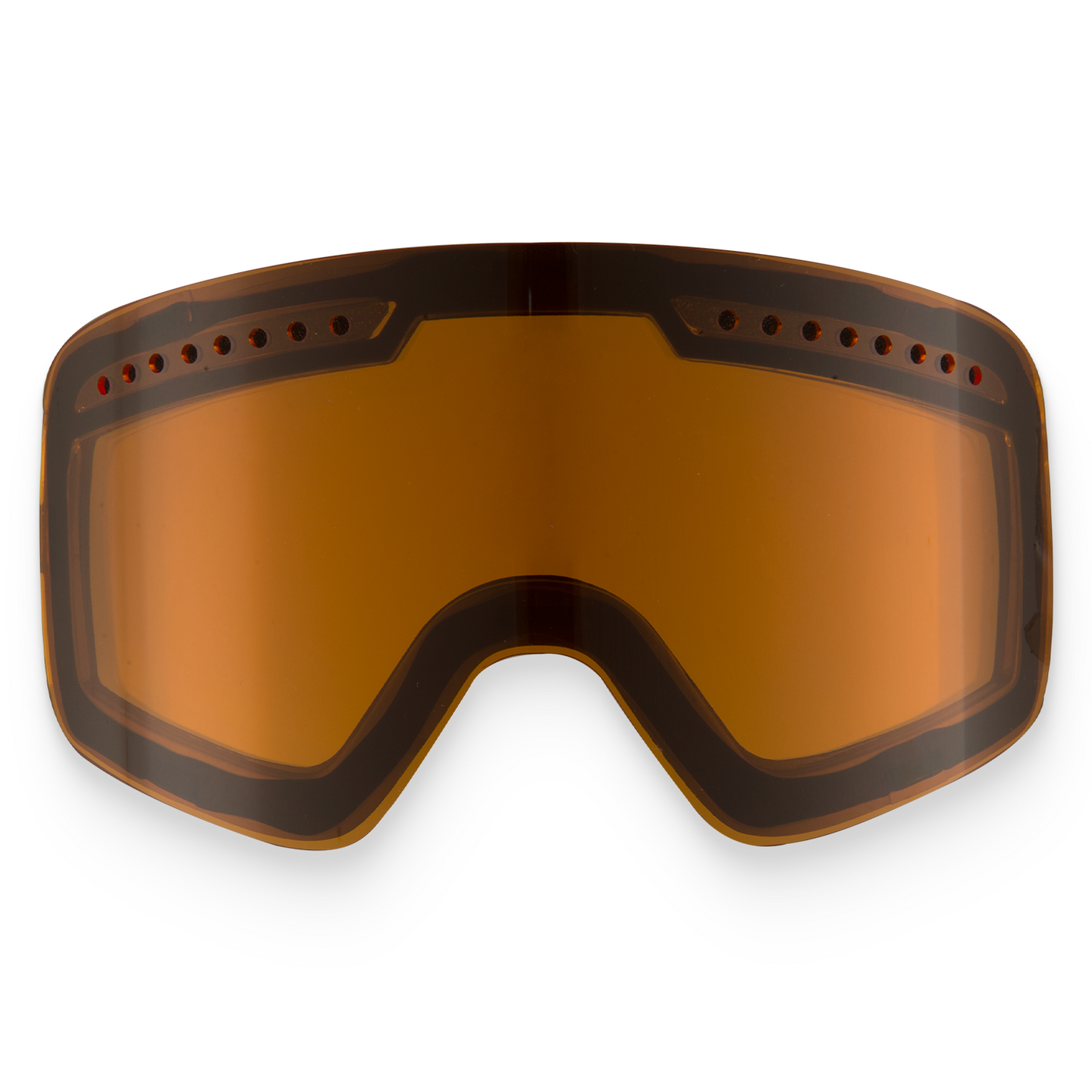
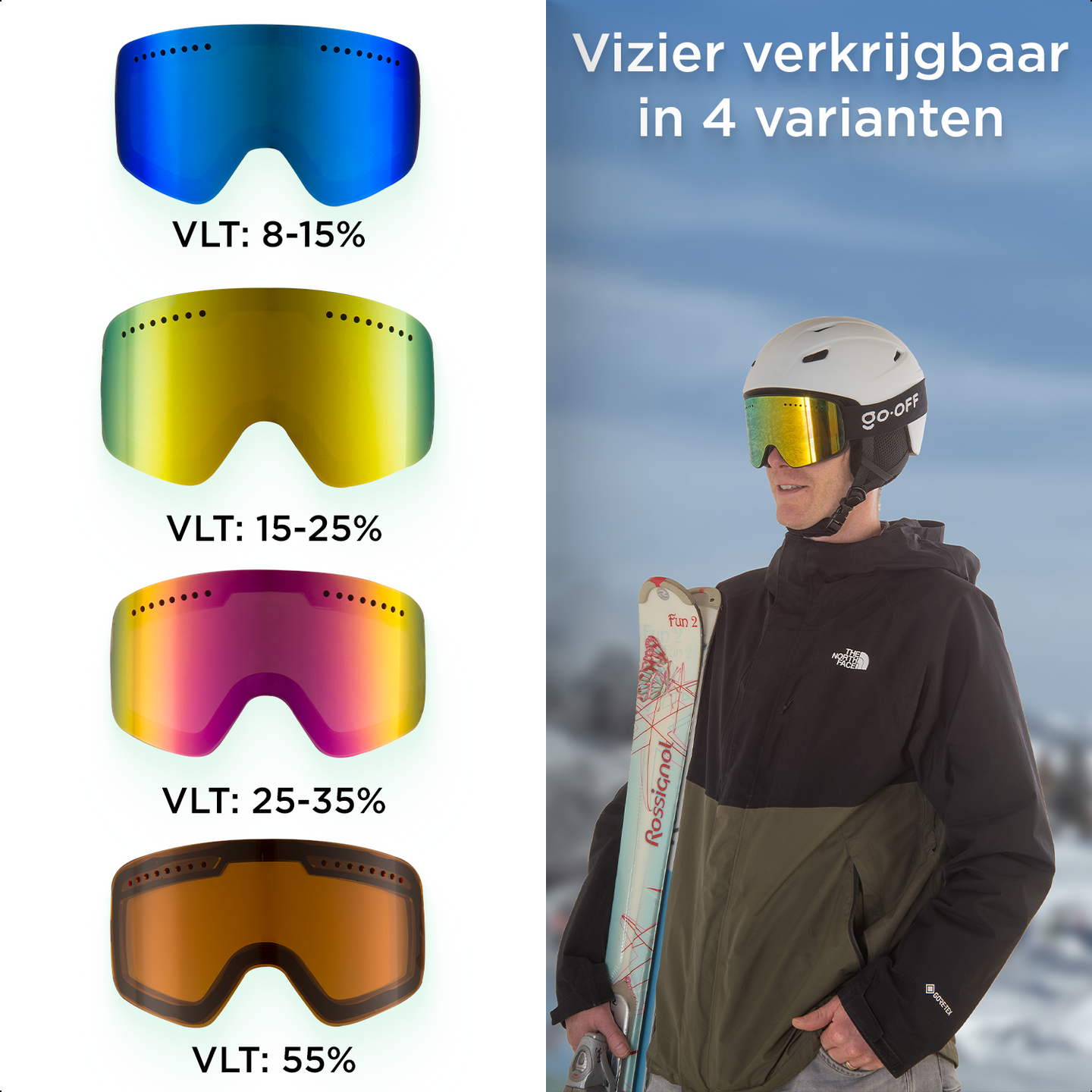
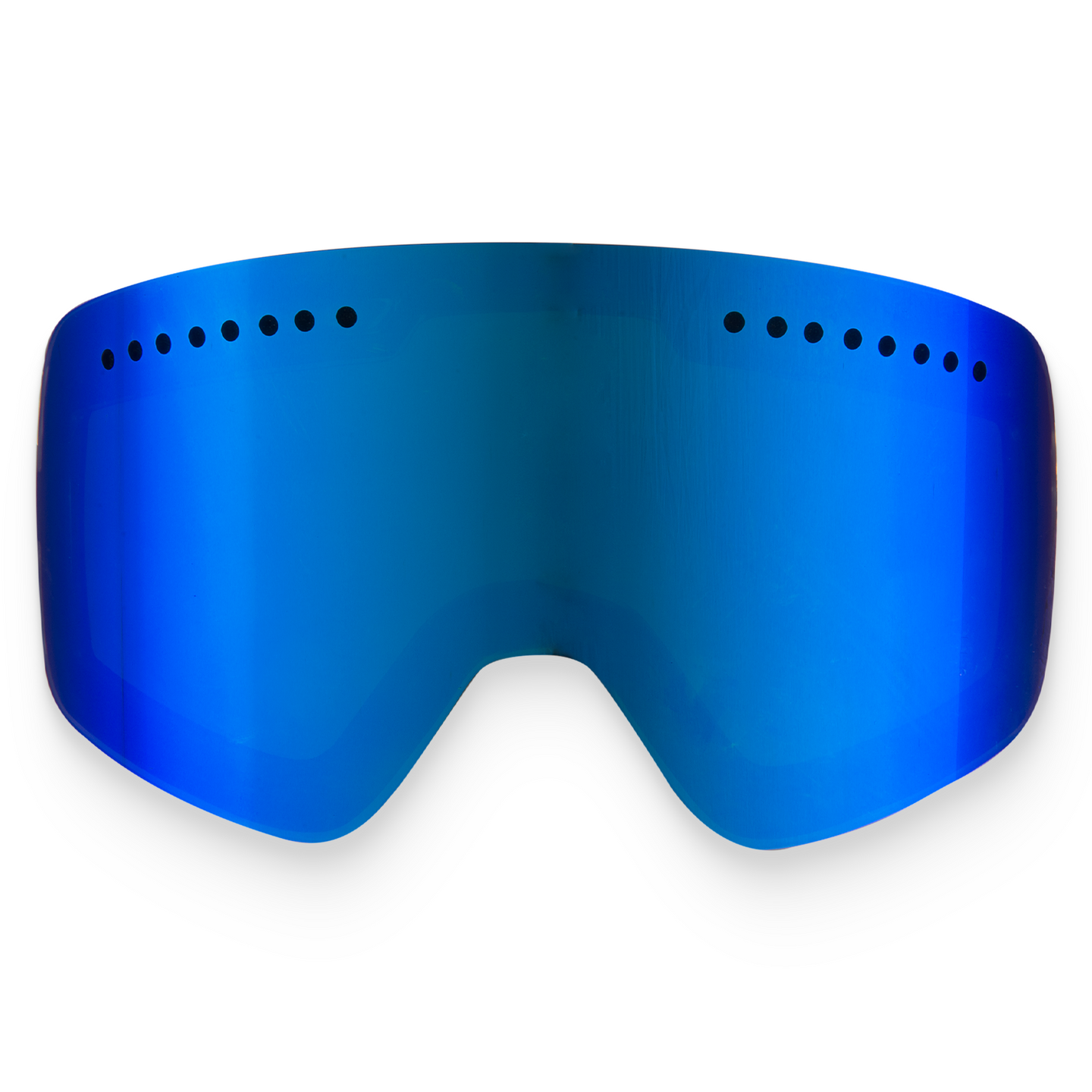
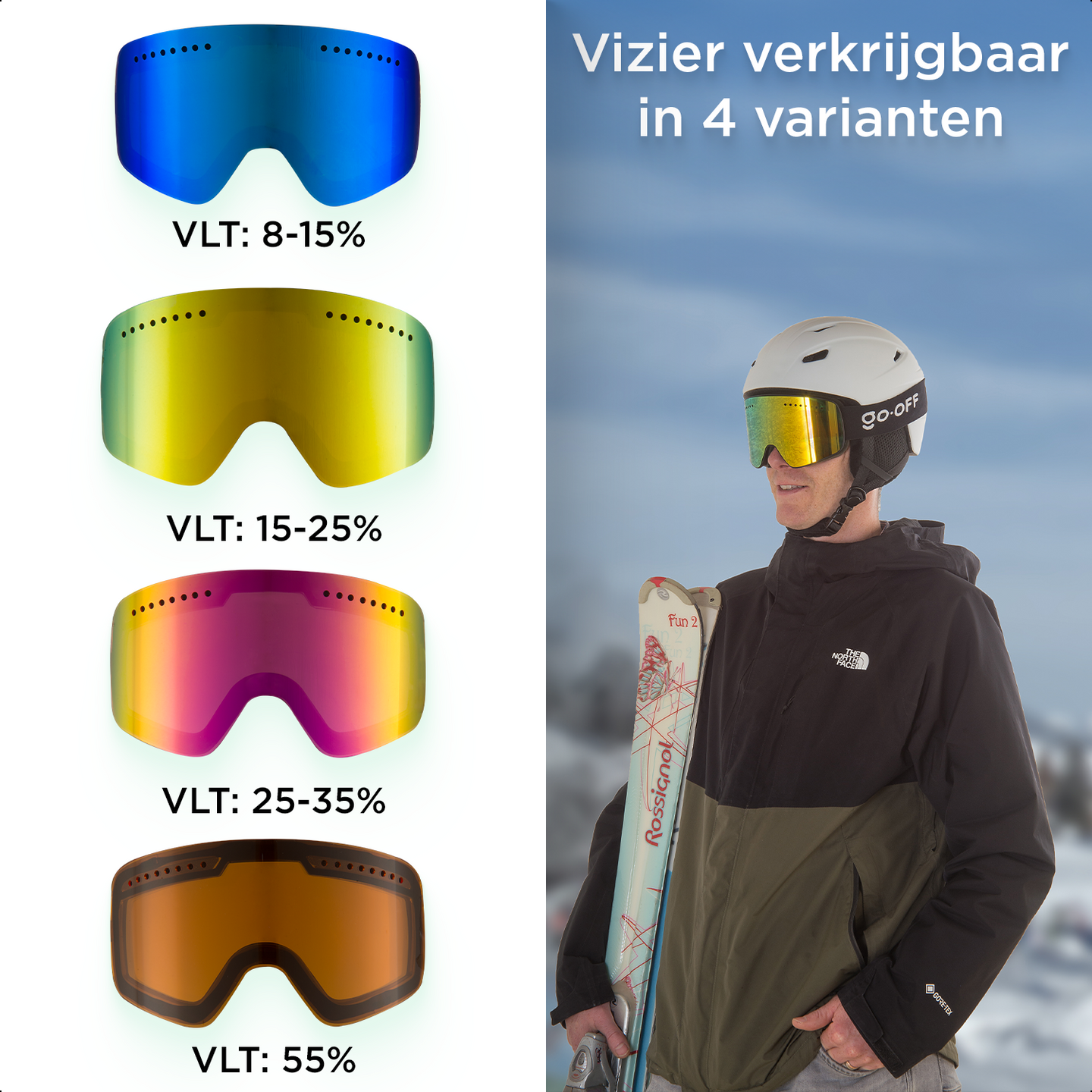
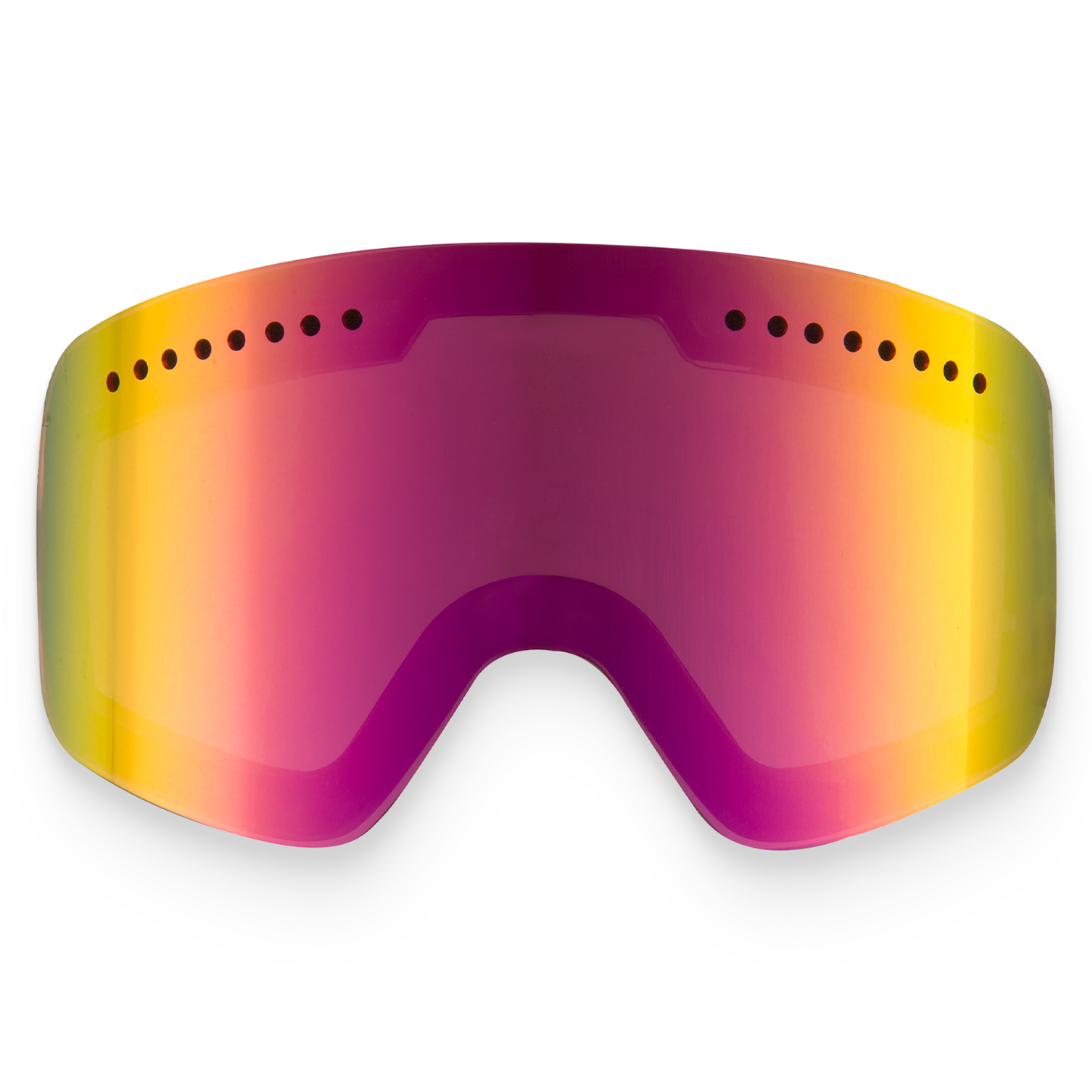
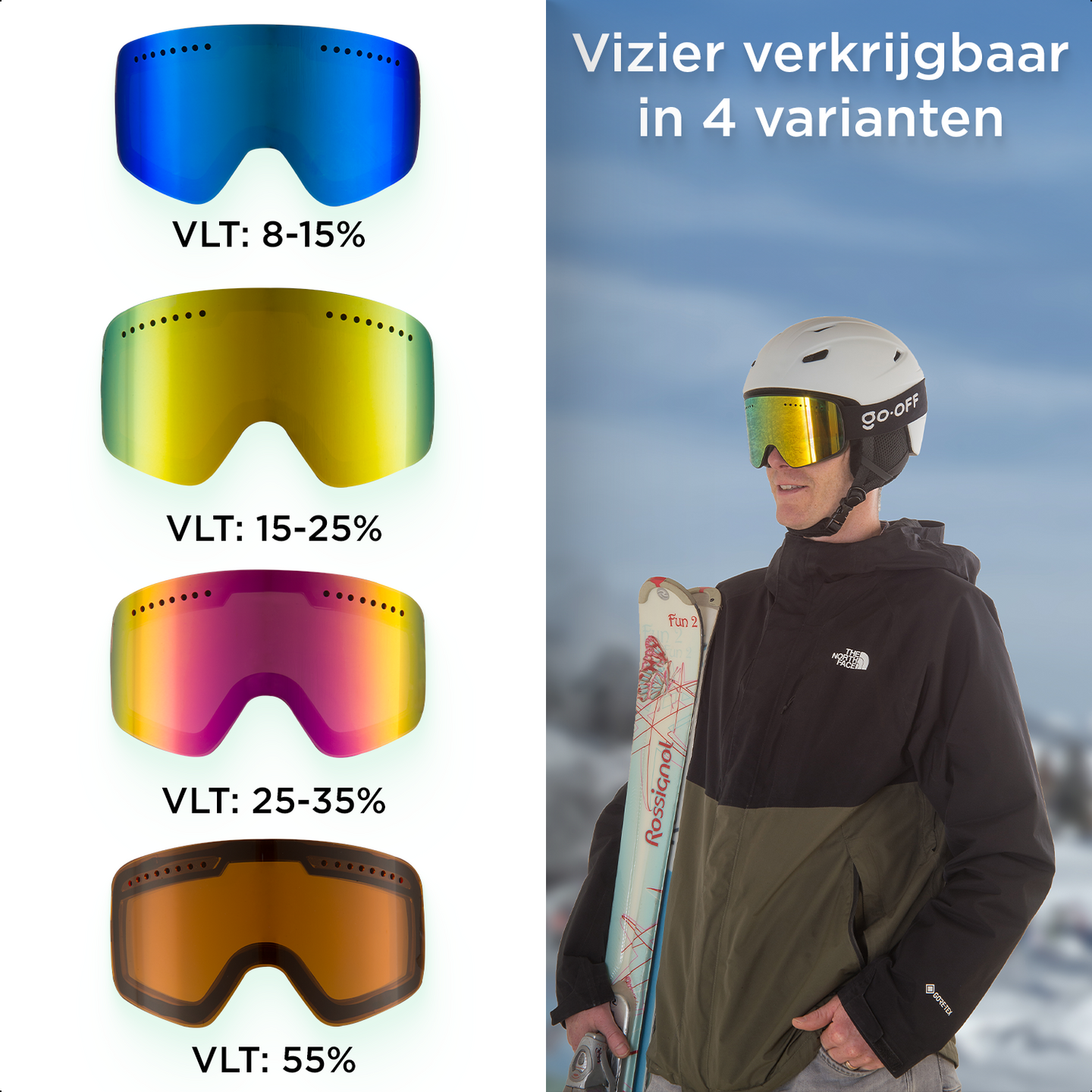
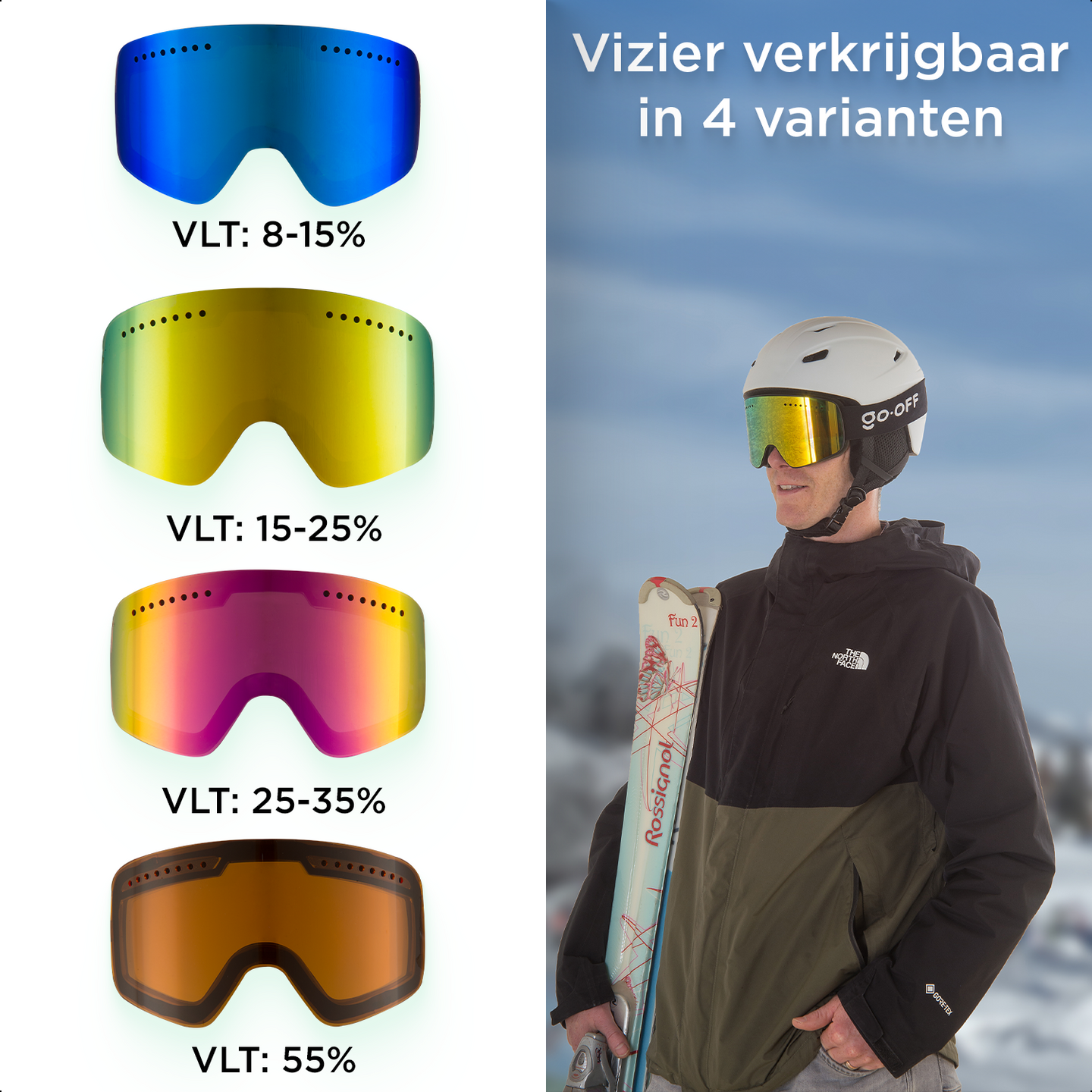
Weather on the mountain changes fast. Bright sun on a glacier, flat light in the forest, snowfall in the afternoon—each condition demands a different lens. That’s why lens interchangeability is essential if you want to enjoy one goggle for many seasons.
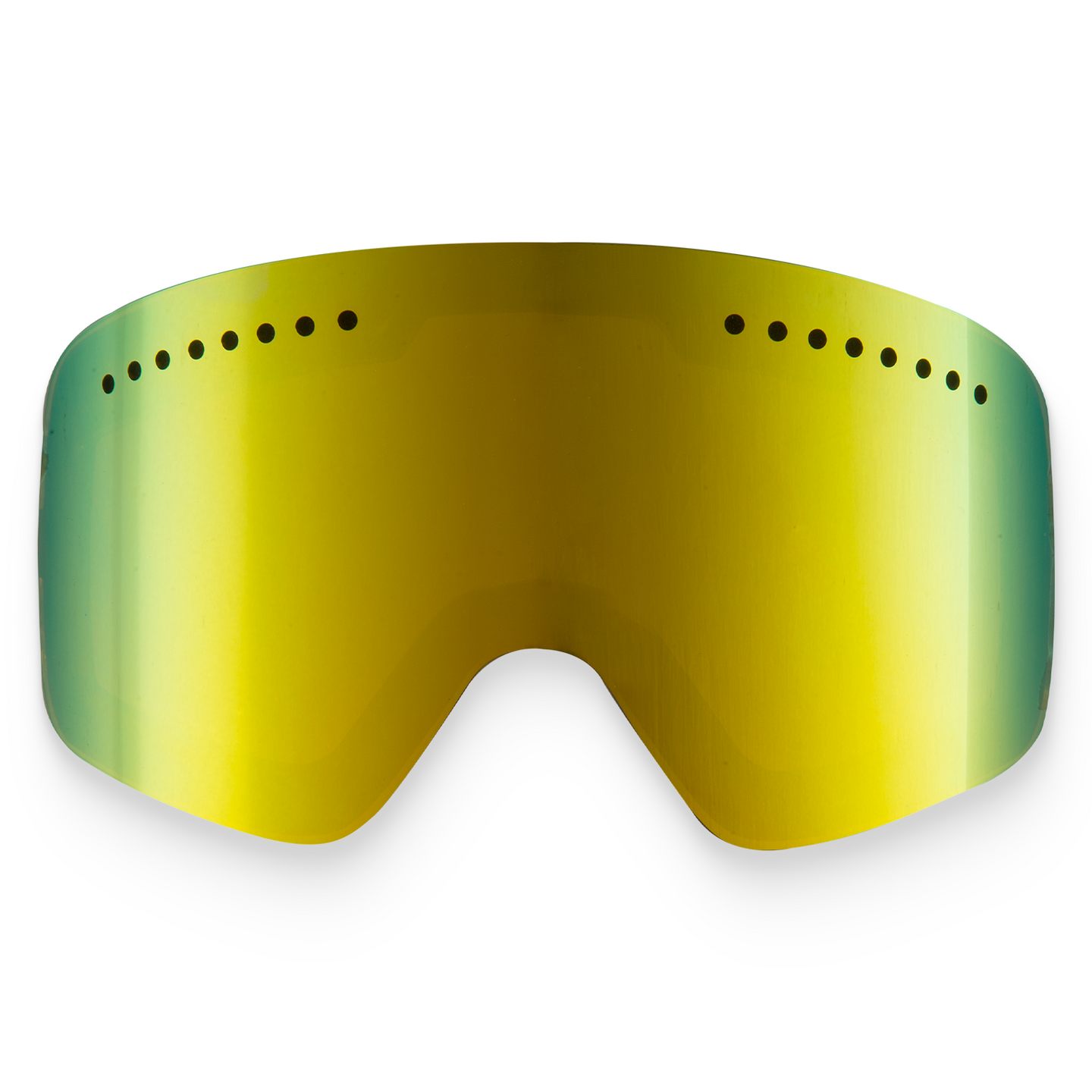
A magnetic lens system allows you to switch lenses quickly and securely, even with gloves on. No forcing, no fiddling. Just the right lens for the right moment. From high-contrast lenses for fog and snowfall to darker lenses for bluebird days, everything is covered with one setup.
This flexibility is what turns a good goggle into a long-term solution. Instead of owning multiple pairs, you adapt one goggle to every ski day.
Why lens interchangeability matters:
With the right lenses, terrain becomes readable again. Depth, bumps, and transitions appear clearly—exactly what you need to ski or snowboard with confidence.
Ventilation: clear vision without fog
Nothing ruins a run faster than fogged-up goggles.
Effective ventilation is essential for any serious pair of ski goggles. Warm air builds up quickly, especially during active riding, hiking sections, or mild weather. Without proper airflow, condensation forms—and visibility disappears.
A smart ventilation system manages airflow without letting cold wind in. Extra ventilation openings at the front of the lens allow fresh air to circulate, while vents at the top let warm air escape naturally. This continuous airflow reduces fogging before it even starts.
Good ventilation works together with the lens and frame design. It’s not about open gaps—it’s about controlled airflow.
Key ventilation features:
A goggle that stays clear allows you to stay relaxed, focused, and in control—run after run.